The Future of Feeding Livestock: Innovations in Sustainable Farming Practices
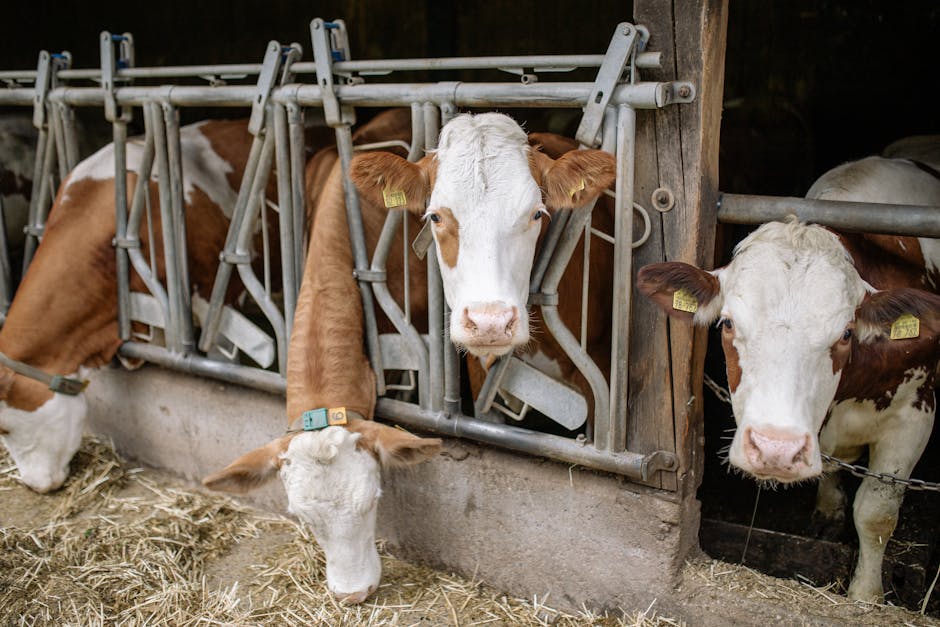
Sustainable farming is revolutionizing how we raise animals for food. As global demand for meat continues to rise, traditional livestock operations are facing unprecedented pressure to adapt without compromising environmental integrity or economic viability.
This shift toward sustainability isn’t merely an ethical choice—it’s becoming a necessity for long-term agricultural success. By integrating innovative technologies and regenerative practices, farmers can reduce their ecological footprint while maintaining profitability.
Understanding the Core Principles of Sustainable Animal Agriculture
Sustainable farming focuses on balancing productivity with environmental stewardship. This approach recognizes that healthy ecosystems are essential for thriving livestock populations.
At its core, sustainable agriculture seeks to create closed-loop systems where waste becomes resources rather than pollutants. These principles apply equally to small family farms and large-scale commercial operations.
Modern sustainable practices often involve rotating grazing patterns, using natural fertilizers, and implementing water conservation techniques tailored specifically for livestock environments.
Innovative Technologies Transforming Modern Ranches
Advancements in precision agriculture have introduced new tools that help farmers monitor and manage their herds more effectively. GPS tracking systems now allow ranchers to optimize pasture usage based on real-time data.
Drones equipped with multispectral cameras enable early detection of plant health issues affecting feed quality. This technology helps maintain optimal nutrition levels for livestock while minimizing resource wastage.
- Data analytics platforms: Provide insights into herd behavior, disease prevention, and breeding efficiency through AI-driven algorithms
- Automated feeding systems: Ensure precise nutrient delivery, reducing overfeeding and associated costs
- Smart fencing solutions: Help contain livestock within designated areas while allowing controlled movement between pastures
Regenerative Grazing Techniques for Healthier Pastures
Rotational grazing has emerged as a cornerstone practice in sustainable livestock management. This method involves systematically moving animals between different paddocks to prevent overgrazing.
By following this pattern, farmers allow vegetation time to recover, which promotes stronger root systems and improved soil structure. Healthy soils, in turn, support greater biodiversity and carbon sequestration capabilities.
Studies show that properly implemented rotational grazing can increase forage production by up to 30% compared to continuous grazing methods. This boost in productivity reduces reliance on external feed sources.
Implementing these techniques requires careful planning regarding stocking rates, rest periods, and fence configurations tailored to each farm’s specific conditions.
Reducing Environmental Impact Through Feed Management
Feed accounts for approximately 60-80% of total costs in livestock operations. Sustainable approaches aim to make this process both economically viable and environmentally responsible.
One promising strategy involves incorporating locally sourced feedstuffs that require less transportation energy. This includes utilizing crop residues, cover crops, and byproducts from nearby processing facilities.
Feeding programs can be optimized through nutritional analysis to ensure livestock receive balanced diets while minimizing excess nutrients that might pollute surrounding waters.
Recent research highlights the benefits of including certain legumes in cattle rations—these plants naturally fix nitrogen in the soil, improving fertility without synthetic inputs.
Biodiversity Conservation Within Livestock Operations
Maintaining diverse habitats around farm properties supports beneficial insect populations that contribute to natural pest control. This reduces dependency on chemical pesticides.
Careful land management practices preserve native flora and fauna, creating microhabitats that enhance overall ecosystem resilience. These efforts benefit both wildlife and agricultural productivity.
Farmers who incorporate hedgerows, buffer strips, and wetland restoration projects report increased pollinator activity near their fields. Greater pollination leads to better yields for companion crops grown alongside livestock operations.
Some progressive farms integrate agroforestry elements—planting trees strategically among pastures—to provide shade for animals while supporting additional income streams from timber or fruit production.
Economic Viability of Sustainable Farming Models
While initial investments may seem daunting, many sustainable practices offer long-term financial advantages. Reduced input costs from organic amendments and efficient resource utilization contribute significantly to bottom-line improvements.
Farms adopting integrated systems often experience lower veterinary expenses due to healthier animals resulting from stress-free living conditions and proper nutrition.
Consumer demand for ethically produced meats continues to grow, opening access to premium markets willing to pay higher prices for sustainably raised products.
Certification programs such as Certified Humane and American Grassfed Association provide market differentiation opportunities that can lead to consistent revenue growth over time.
Community Engagement and Education in Sustainable Farming
Successful implementation of sustainable practices relies heavily on knowledge transfer within local communities. Farmers who share experiences and best practices accelerate industry-wide adoption of eco-friendly methods.
Many extension services now offer specialized training modules focused exclusively on transitioning towards regenerative agriculture models. These programs address practical concerns related to equipment needs and operational adjustments.
Collaboration between academic institutions and farming cooperatives fosters innovation through field trials testing new methodologies under various climatic conditions.
Youth education initiatives play a crucial role in shaping future generations’ attitudes toward sustainable food systems. Hands-on learning experiences at working farms cultivate appreciation for responsible agricultural practices.
Policy Support and Incentives for Sustainable Livestock Production
Government agencies worldwide are recognizing the importance of shifting toward greener agricultural practices. Tax incentives and grant programs encourage farmers to adopt environmentally sound methods.
Carbon credit schemes emerging across several regions reward producers for implementing climate-smart strategies that reduce greenhouse gas emissions. These programs provide additional income streams while promoting planetary health.
Local zoning laws are being revised to accommodate mixed-use landscapes that combine residential development with sustainable farming enterprises. Such policies facilitate urban-agriculture partnerships benefiting both communities and rural economies.
International trade agreements increasingly include provisions favoring countries committed to sustainable production standards. This trend creates competitive advantages for nations prioritizing ecological responsibility.
Overcoming Challenges in Transitioning to Sustainability
Transitioning from conventional to sustainable practices presents unique challenges requiring strategic planning and patience. Initial yield reductions during system adaptation phases must be anticipated and managed carefully.
Lack of standardized metrics makes performance evaluation difficult for some alternative methods. Developing common benchmarks facilitates meaningful comparisons between different sustainability approaches.
Access to capital remains a significant barrier for smaller operations seeking to invest in necessary infrastructure upgrades. Creative financing options and cooperative purchasing arrangements can alleviate these constraints.
Education gaps persist regarding the full range of available technologies and techniques suitable for different geographic locations and climatic zones. Tailored extension services help bridge this information divide.
Looking Ahead: The Next Generation of Sustainable Farming
Ongoing research promises exciting developments that could redefine modern livestock management. Scientists are exploring novel ways to enhance animal welfare while simultaneously improving environmental outcomes.
Biotechnology advancements may soon allow for selective breeding programs targeting traits that naturally reduce methane emissions from ruminants. This would represent a major breakthrough in mitigating livestock-related climate impacts.
Emerging circular economy models envision complete integration of waste streams, turning manure into renewable energy sources or high-value compost materials. Such innovations align perfectly with zero-waste objectives.
As digital connectivity expands globally, remote monitoring systems will become even more sophisticated, enabling real-time decision-making based on predictive analytics derived from vast datasets.
Conclusion
Sustainable farming represents a paradigm shift in how we approach livestock production. It combines scientific rigor with ecological wisdom to create resilient agricultural systems capable of meeting current demands without jeopardizing future generations’ prospects.
By embracing technological innovations, regenerative practices, and collaborative networks, today’s farmers are laying the foundation for tomorrow’s food security. Continued investment in research, policy reform, and community engagement will determine the pace and scope of this transformative journey.