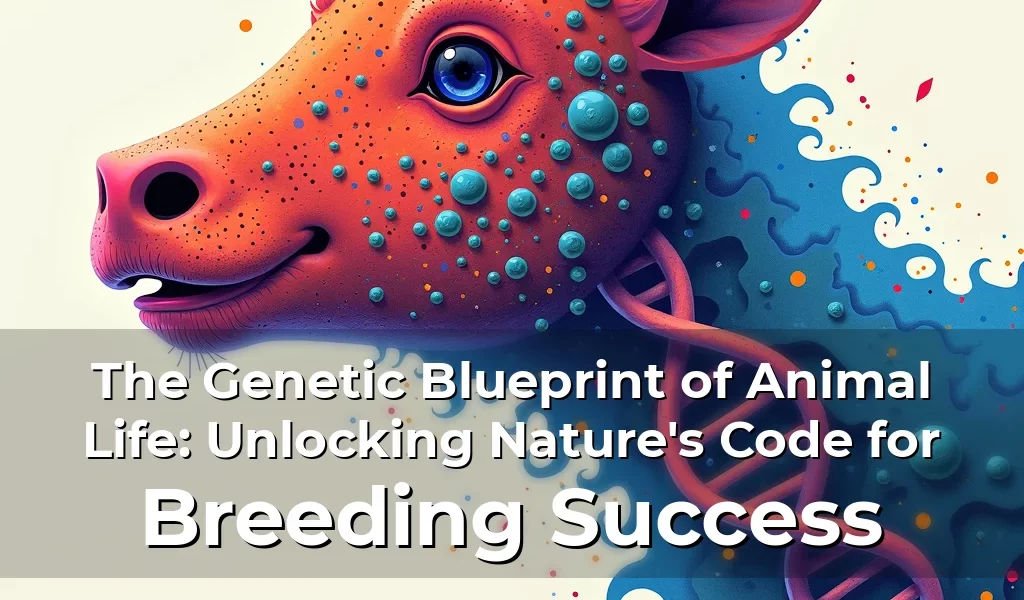
The Genetic Blueprint of Animal Life: Unveiling Nature’s Code Through Modern Science
In an era where precision agriculture meets molecular biology, understanding animal genetics has become essential for breeders, researchers, and livestock caretakers alike. This field explores how hereditary traits are passed from generation to generation, offering unprecedented opportunities for improving productivity, health, and sustainability across various species.
From enhancing milk yield in dairy cattle to developing disease-resistant poultry strains, genetic principles guide modern agricultural practices. As we delve deeper into this complex yet fascinating subject, we uncover not only scientific advancements but also ethical considerations shaping our relationship with farm animals.
Decoding the Fundamentals of Heredity
The science of animal genetics begins with comprehending basic biological mechanisms that govern inheritance patterns. Genes, located within chromosomes inside every living cell, determine observable characteristics known as phenotypes.
These inherited traits range from simple features like coat color in dogs to complex physiological processes such as lactation efficiency in cows. By studying these genetic foundations, scientists can predict breeding outcomes with remarkable accuracy.
- Dominant vs Recessive Traits: Some genes exhibit dominance over others, meaning certain physical attributes will manifest even when only one parent carries them.
- Polygenic Inheritance: Many economically significant traits result from interactions among multiple genes rather than single-gene influences.
Crossbreeding programs often utilize knowledge of Mendelian inheritance laws, which describe predictable patterns of trait transmission through generations. These principles form the backbone of selective breeding initiatives worldwide.
Beyond traditional breeding methods, advances in genomics have revolutionized our ability to analyze entire genomes rapidly. Technologies like whole-genome sequencing now enable precise identification of favorable alleles associated with desired traits.
The Role of Genetics in Livestock Production
Animal genetics plays a pivotal role in optimizing food production systems by enabling targeted improvements in meat quality, egg laying capacity, and growth rates. Scientifically informed selection strategies ensure resources are used efficiently while maintaining high standards of animal welfare.
Farmers benefit significantly from genetic research as it allows them to make data-driven decisions regarding herd management. Selecting breeds based on proven genetic markers ensures consistent performance metrics across populations.
For example, dairy producers use genomic evaluations to identify heifers with superior udder structure and milk composition potential before they reach maturity. This early assessment prevents costly mistakes during reproductive cycles.
Similarly, pork industry professionals rely on marker-assisted selection techniques to accelerate development of lean muscle mass in swine without compromising carcass value. Such innovations directly impact bottom-line profitability for agribusiness operations.
Genetic Diversity: A Double-Edged Sword in Breeding Programs
Maintaining adequate genetic diversity within livestock populations presents both challenges and benefits for breeders aiming to produce resilient stock. While increased uniformity may enhance certain desirable traits, excessive homogeneity raises risks of vulnerability to diseases and environmental stressors.
Wild ancestors of domesticated animals typically possess greater genetic variability compared to their selectively bred counterparts. This natural variation provides built-in resilience against pathogens and climate fluctuations that might affect commercial flocks or herds.
Breed registries play crucial roles in monitoring gene pools and preventing inbreeding depression through strict mating guidelines. They maintain databases tracking lineage information vital for making responsible breeding choices.
Modern conservation efforts include preserving rare breeds whose unique genetic profiles could prove invaluable in future adaptation scenarios due to changing climatic conditions or emerging zoonotic threats.
To illustrate this balance, consider the case of the Holstein cow – widely recognized for its exceptional milk-producing capabilities yet relatively limited genetic pool compared to less productive but genetically diverse local breeds found in many regions around the globe.
Biotechnology Innovations Transforming Animal Genetics
Rapid developments in biotechnological tools have dramatically expanded possibilities in manipulating animal genetics for practical applications. Techniques ranging from artificial insemination to gene editing now offer unprecedented control over heritable characteristics.
Artificial insemination remains one of the most impactful technologies since its introduction decades ago. It enables efficient distribution of superior germplasm across geographical boundaries without requiring direct contact between breeding pairs.
Recent breakthroughs in CRISPR-Cas9 technology allow for highly precise modifications at specific DNA locations. Researchers successfully tested this approach to edit pig genomes and confer resistance against Porcine Reproductive and Respiratory Syndrome virus (PRRSV).
Such advancements raise important questions about long-term consequences of altering genetic material beyond current scientific consensus. Ethical debates continue surrounding appropriate uses of genome engineering in agriculture.
Despite regulatory hurdles, countries with advanced biosecurity measures have begun pilot projects exploring controlled application of gene-editing techniques aimed solely at enhancing animal well-being and reducing dependency on antibiotics.
Economic Implications of Strategic Genetic Selection
Sophisticated genetic evaluation systems contribute substantially to economic efficiencies throughout the agricultural sector by minimizing guesswork involved in selecting optimal breeding candidates.
Data analytics platforms integrate pedigree records with performance measurements from offspring to calculate Expected Progeny Differences (EPDs) indicating probable future achievements of progeny from given matings.
This predictive modeling helps ranchers avoid investing time and resources into individuals unlikely to deliver commercially viable results. The financial implications extend far beyond immediate gains from improved yields.
Long-term advantages include reduced veterinary costs associated with hereditary disorders linked to poor genetic backgrounds. Early detection of predispositions enables preemptive interventions that save lives and prevent losses.
A compelling statistic illustrates this cost-benefit equation: according to USDA studies, implementing sound genetic improvement programs can increase net returns by up to 25% over conventional breeding approaches within five years.
Navigating Ethical Considerations in Animal Genetic Research
While technological progress brings exciting opportunities, it simultaneously introduces moral dilemmas concerning animal rights and biodiversity preservation. Stakeholders must weigh potential gains against possible negative ramifications affecting ecosystem stability.
Transparency becomes paramount when deploying novel genetic enhancement procedures involving non-traditional breeding methods. Consumers increasingly demand clear labeling practices regarding modified organisms entering food supply chains.
Ethical frameworks guide decision-making processes related to experimental protocols impacting living beings. Institutional review boards evaluate proposed research ensuring humane treatment standards are maintained at all stages.
Public perception shapes policy directions governing acceptable levels of intervention in natural evolutionary pathways. Engaging communities through education fosters trust necessary for sustainable implementation of innovative solutions.
Ongoing dialogues between scientists, policymakers, and citizens remain critical in establishing balanced regulations protecting both human interests and ecological integrity.
Future Frontiers in Animal Genetics
Emerging trends indicate that interdisciplinary collaboration will define next-generation breakthroughs in animal genetics. Combining expertise from fields like machine learning, epigenetics, and synthetic biology promises transformative discoveries soon to be realized.
Researchers investigate how epigenetic factors influence expression of dormant genes under different environmental pressures. Understanding these regulatory mechanisms opens avenues for developing adaptive livestock capable of thriving amidst global changes.
Synthetic biology approaches aim at designing entirely new biological functions through modular assembly of standardized genetic components. This futuristic vision includes creating microbes specifically engineered to assist in nutrient absorption processes within ruminants.
Machine learning algorithms already help process vast datasets identifying correlations previously undetectable using traditional statistical models alone. Predictive analytics will likely refine selection criteria further improving accuracy of outcome predictions.
As these cutting-edge methodologies mature, expect increased emphasis placed upon holistic wellness indicators alongside quantitative performance metrics guiding breeding objectives moving forward.
Practical Applications Across Species
Variability exists among species regarding responsiveness to genetic manipulation techniques necessitating tailored approaches for each type of livestock managed. Domesticated birds represent particularly interesting cases due to rapid life cycles allowing quick validation of theoretical findings.
Chicken breeding programs exemplify successful integration of genomic technologies leading to marked improvements in feed conversion ratios and disease resistance parameters. Similar successes have been documented across sheep industries focusing on wool quality enhancements.
Horse racing enthusiasts take advantage of extensive equine genomic databases containing records spanning centuries of selective breeding histories. These repositories facilitate identification of elite bloodlines suitable for competitive purposes.
Bison conservationists employ mitochondrial DNA analysis tracing maternal lineages crucial for sustaining healthy population structures within protected reserves. Non-invasive sampling methods minimize disturbance to wildlife during these investigations.
Laboratories specializing in aquatic sciences develop transgenic fish varieties exhibiting enhanced growth rates while retaining flavor profiles preferred by consumers. Careful regulation ensures these modifications don’t compromise native ecosystems where stocking occurs.
Building Sustainable Practices Through Responsible Genetics
Adopting best practices rooted in ethical science forms foundation for cultivating sustainable livestock operations benefiting both producers and environment. Education empowers farmers with knowledge required to implement evidence-based strategies effectively.
Training programs focused on interpreting genetic test results prepare practitioners to make informed decisions regarding breeding pair selections. Accessible online portals provide real-time updates on latest research findings influencing current recommendations.
Certification schemes recognize facilities demonstrating commitment towards genetic stewardship principles. These credentials build consumer confidence through assurance of product quality derived from scientifically validated sources.
Collaborative networks connecting academia, industry leaders, and government agencies foster innovation exchanges accelerating adoption curves for beneficial technologies reaching wider audiences quickly.
Investments directed toward infrastructure supporting genomic testing capabilities expand options available to rural communities traditionally underserved by specialized services concentrated mainly in urban centers.
Conclusion
Understanding the intricate world of animal genetics unlocks numerous possibilities for advancing agricultural systems sustainably while safeguarding biodiversity values. Integrating scientific rigor with compassionate care defines optimal paths forward for managing global food security challenges.
By embracing ongoing educational pursuits and staying abreast of evolving technical landscapes, stakeholders position themselves strategically within dynamic markets shaped evermore profoundly by genetic discoveries occurring at breakneck speeds daily.

news is a contributor at AnimalGrow. We are committed to providing well-researched, accurate, and valuable content to our readers.