German Shepherd Weight Chart by Month
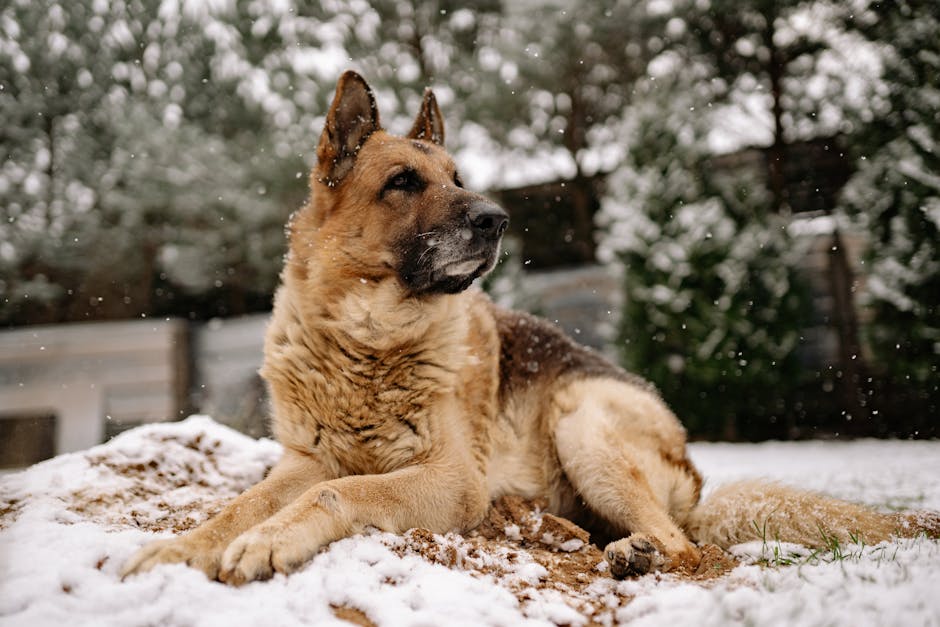
The owner who raises a German Shepherd must understand all the details related to her health. First of all, her weight and height are evaluated as indicators of the correctness of the exterior. Given these parameters for months, you can determine how the development of the puppy meets the standards. It is important to understand that German Shepherds are animals that have individual characteristics.
External Data
The German Shepherd is a large dog breed. Females are slightly lighter than males.
Slight deviations in the mass and height of the withers are not unusual, any excess or deficiency with proper care will even out if the pet is healthy.
To understand how the development of the animal meets accepted standards, the puppy growth table will help. For convenience, you can keep a log of observations. You need to weigh and measure your pet, compare the parameters with the table, record the results.
How a pet is formed and grows
For representatives of the German Shepherd breed, there are characteristic features of growth. The time of growing up in a dog is extended – the formation of the skeleton and muscle mass is completed at about 3 years. At this point, the weight becomes stable, as does the height at the withers.
It is better to take a puppy from a breeder after 9 weeks. By this time, he will be able to do without a mother, and the owner will have the opportunity to understand how he will look – smaller dogs almost do not differ from each other in appearance. The growth of the puppy is uneven.
Stages of development
The following stages of development of the German Shepherd are distinguished:
- Intrauterine. During this period, the genetic characteristics of the dog are laid. The best solution is to take a pet with a pedigree in order to have an idea of \u200b\u200bits heredity.
- From birth to 6 weeks. At this time, the puppies are under the care of the breeder. This is a period of intensive weight gain, in the first week the weight of the German shepherd becomes 2, in the second – 3 times more.
- From 1.5 months to six months. Time of intense growth. The weight of a puppy at the age of 2 months is 7 times the weight of a newborn. Up to 4 months, the stage of accelerated weight gain continues. Too rapid growth can cause bone disease – the development of the skeleton may not keep up with the increase in muscle mass.
Changes by month
During certain periods, the mass may lag behind the norm or be ahead of it. As a result, the dog grows to the following parameters:
- The male has a height at the withers of about 65 cm, a body length of 71-77 cm and a weight of 30-40 kg.
- The bitch is characterized by a height at the withers of 57-59 cm, a body length of 61-70 cm and a weight of 23-33 kg.
Puppies options:
| Age | Changes |
| Up to 3 months | A newborn puppy should weigh 350-550 g. In the first 4 weeks, he gains 100 g per day, then for 8 weeks – about 170 g per day. At the age of one month, the weight of the puppy is 4 kg. If the weight of the dog at 2 months is far ahead of the accepted indicators, it is necessary to regulate it with the help of a properly balanced feeding. During this period, there is no difference between males and females – their sizes are the same. At this time, the character of the pet manifests itself |
| 3-6 months | Up to 4 months – the stage of active weight gain. The larger the pet, the slower it grows. The mass of the puppy increases by 3 times, the limbs become 3 times longer, the height at the withers is doubled. At the age of four months, the puppy weighs about 20 kg, height at the withers is 52 cm, chest circumference is 64 cm. At 6 months, it reaches the size of an adult dog. At this time, you need to carefully monitor the development of the pet – it is the owner who is responsible for his health and exterior. |
| 6 months – year | At the beginning of this period, the weight of the puppy is half the weight of an adult dog. Then it becomes stronger, the mass increases, but the growth of the pet slows down. At 6 months, the dog is visually similar to an adult, but its behavior and insufficient muscle mass show that it is still small. Tubular bones stop growing, but flat ones begin to grow. The intensity of the increase decreases – the puppy becomes even more like an adult. Mating should be avoided during this period – they cause stunting |
| 12–18 months | Growth almost stops |
| 1.5-3 years | Muscle mass grows, the dog becomes more mature. At 2 years old, the dog gives the impression of a mature individual, but a two-year-old pet is not yet considered an adult. In the interval from 2 to 3 years, the dog practically does not grow. But her weight continues to increase. Completion of development occurs by 3 years |
The table shows the average figures for this breed. The puppy’s growth and weight chart may not match the numbers.
General Tips
Small deviations from the norm should not be a cause for concern – it is common for animals to violate standards. With a clear departure from the schedule, you must contact your veterinarian and consult with him.
Deviations from the norm in terms of weight are recommended to be regulated through a balanced diet. It should also be remembered that they can be caused by diseases. In this case, medication will be required.
The health of a dog also depends on a competent regime – you need to walk and exercise with it. Active games, exercises and training for the development of the musculoskeletal system are necessary so that the dog grows up healthy and can become a reliable, strong protector and true friend.