


Regenerative agriculture has gained significant attention in recent years, with various stakeholders framing it as the solution to our broken food system. However, this approach is often shrouded in contradictions, and one of the primary concerns is its reliance on livestock farming.
Agricultural Land Use and Animal Farming
Globally, 83% of agricultural land is dedicated to animal farming, producing only 18% of our total calories. The carbon footprint of meat and dairy is significantly higher than plant-based alternatives, and the inefficiencies are staggering.
- According to Oxford University research, shifting to a plant-based food system could cut food emissions in half and free up three-quarters of farmland.
- The carbon footprint of meat and dairy is significantly higher than plant-based alternatives.
- Animal farming is a major contributor to greenhouse gas emissions, deforestation, and water pollution.
The Misconception of Livestock and Soil Fertility
The assumption that livestock is necessary for soil fertility is a common misconception. Natural ecosystems maintain soil health without the presence of domesticated animals. Earthworms, microbes, fungi, and plant roots already contribute to soil health.
- Earthworms, microbes, fungi, and plant roots maintain soil health without the presence of domesticated animals.
- The concept of “regenerative agriculture” should be redefined to exclude livestock farming.
- Stock-free organic farming, which avoids all animal inputs, can achieve similar benefits to regenerative agriculture.
The Impact of Livestock Farming
The production of meat and dairy has severe environmental and health consequences. The use of antibiotics in livestock farming contributes to antimicrobial resistance (AMR), a significant global health threat.
“The WHO ranks antimicrobial resistance among the top 10 global health threats. By 2050, AMR is projected to kill more than 10 million people per year, more than all global deaths from COVID-19.”
A New Path Forward
Critics often argue that vegan or stock-free farming is not viable for farmers. However, this perspective neglects the fact that many livestock farmers are already morally concerned about their work and want to transition to more sustainable practices.
- 56% of livestock farmers feel morally concerned about their work, and 45% suppress feelings of compassion to carry on.
- 74% of livestock farmers would welcome government-funded training in non-livestock farming.
- Training, transition support, and financial incentives are necessary to shift towards more ethical, ecological land use.
A Call to Action
Regenerative agriculture must evolve to exclude livestock farming and focus on plant-based systems. Rewilding land, planting trees, and restoring wetlands are essential regenerative acts that can help address the climate and biodiversity crises. Regenerative agriculture has the potential to benefit both people and the planet, but only if we’re honest about its limits and take a proactive approach to address the environmental and health consequences of livestock farming.
This Author
Hamish Ainsley is a sustainability advocate, vegan business founder, and writer focused on ethical food systems, wildlife, and decarbonisation.


news is a contributor at AnimalGrow. We are committed to providing well-researched, accurate, and valuable content to our readers.
You May Also Like


Challenging the Assumption: Cows Can Play a Positive Role in Climate Change
Cows have become the scapegoats of climate change. Despite contributing only 9% to global methane emissions, dairy cow and cattle...
Pet Nutrition vs Human Food
The Science Behind Pet Nutrition: Why Your Furry Friends Need Specialized Diets In today's fast-paced world, pet owners often find...
Cattle and Methane: A Complex Issue
**Understanding the Impact of Cattle on Methane Emissions** Methane is a potent greenhouse gas that contributes significantly to climate change....
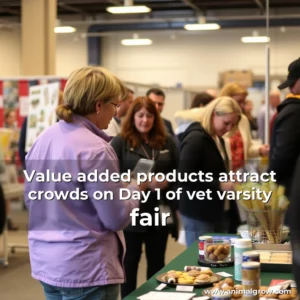
Value added products attract crowds on Day 1 of vet varsity fair
The Significance of Pashu Palan Mela The Pashu Palan Mela is an annual event that brings together animal lovers, scientists,...